
Muscle Shoals is not a big place. It sits on the Tennessee River in north-west Alabama, one of four small towns clustered together, and there is no obvious reason why some of the best American records of the twentieth century should have been made there rather than in New York, Los Angeles or even Memphis.
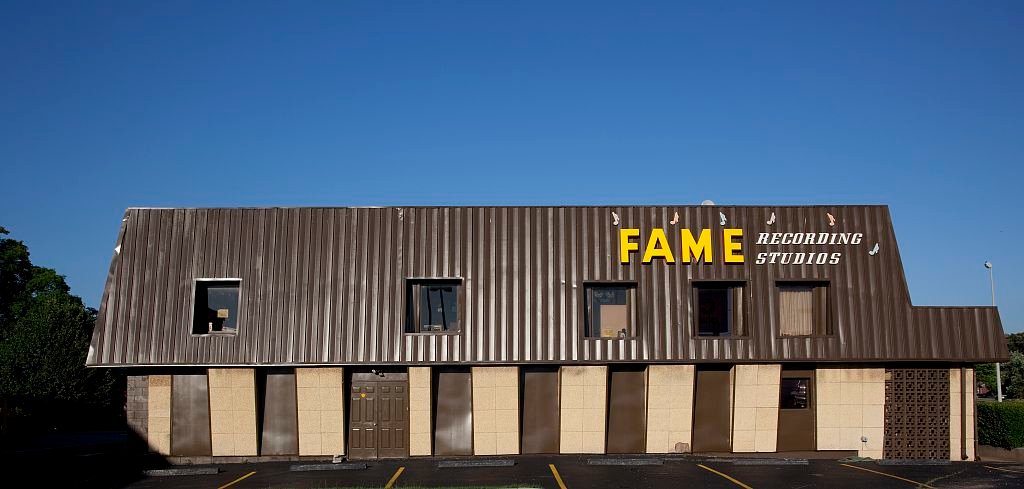
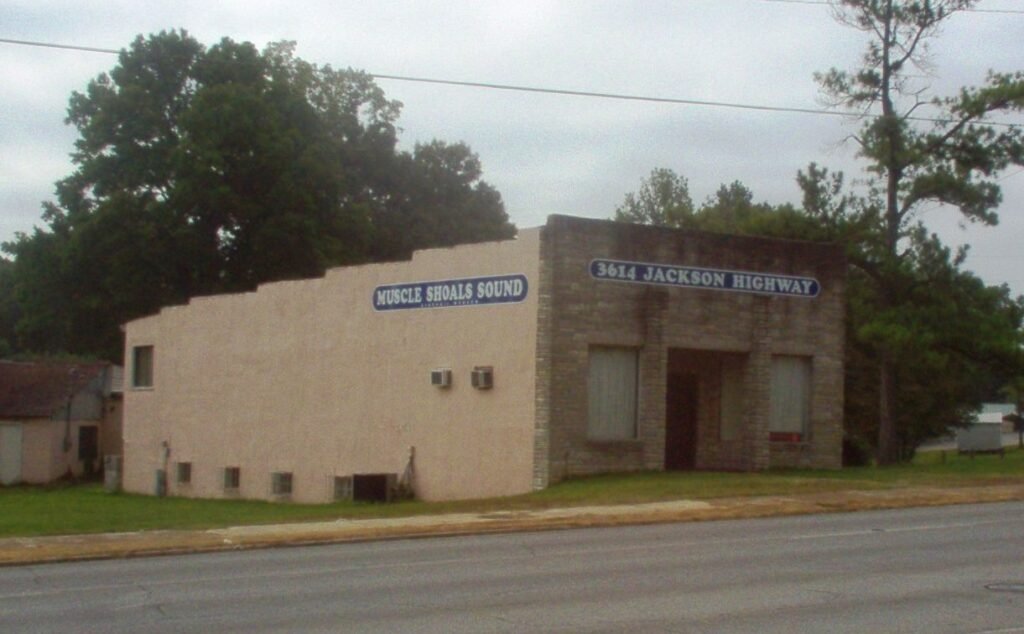
But they were. Percy Sledge, Aretha Franklin, Wilson Pickett, Clarence Carter, Candi Staton, the Staple Singers, the Rolling Stones, Paul Simon, Bob Seger — all of them cut records in a pair of unglamorous buildings in a town most Americans could not find on a map. This is how that happened, and why the records sound the way they do.
FAME, and Rick Hall
The story starts with Rick Hall and FAME Studios in Muscle Shoals proper. Hall built a studio in a place with no music industry, no session scene and no obvious customers, and then set about creating all three.
What he assembled was a house band: local players, mostly white, who spent their working lives in the same room developing a collective feel. That last part is the whole story. A rhythm section that plays together every day for years stops being four musicians and becomes one instrument, and the thing it develops is not technique but agreement — a shared sense of where the beat sits and how much space to leave.
Atlantic Records started sending artists down. Jerry Wexler, Atlantic’s producer and the most important talent-spotter in soul music, worked out that he could get results in Alabama he could not get in New York, and cheaper.
The Swampers, and the split
In 1969 four of Hall’s session musicians — Barry Beckett on keyboards, Roger Hawkins on drums, Jimmy Johnson on guitar and David Hood on bass — left FAME to open their own place. Officially the Muscle Shoals Rhythm Section; universally, the Swampers.
They set up at 3614 Jackson Highway in Sheffield, a concrete block building from around 1946 that had previously been a coffin showroom. Jerry Wexler put up the startup money.
Consider what that took. Four session players in rural Alabama, none of them famous, walked out on the most successful studio in the region to compete with it from a converted funeral supply shop across the river. Within a few years they had recorded the Rolling Stones.
What the Muscle Shoals sound actually is
The Muscle Shoals sound is easier to hear than to define, but there are specific things going on.
Behind the beat
The defining characteristic. Hawkins in particular played slightly behind where you expect the beat to be, and the whole section followed. The effect is a kind of drag or lean — the music pulls back against itself rather than pushing forward. On a ballad this is devastating. It is why Percy Sledge’s “Out of Left Field” feels like it is being sung by someone reluctant to finish the sentence.
Space
Muscle Shoals arrangements leave gaps. Compare almost any session from that room with a contemporary Motown record, where every available frequency is occupied. The Alabama records give the singer somewhere to stand.
Warmth
Where the Hi sound in Memphis is dry and close, and Stax is punchy and horn-forward, Muscle Shoals is rounder and more elastic. Part of that is the rooms, part is the tape and the desks, and part is the playing.
Restraint as a discipline
These were players who could have showed off and chose not to, over and over, for years. The bass lines are simple. The guitar parts are functional. Almost nothing anyone plays on a Muscle Shoals record is difficult, and almost nobody else can make it sound like that.
The Aretha session
The single most consequential thing that happened at FAME lasted less than a day and ended in a row.
In January 1967 Jerry Wexler brought Aretha Franklin to Muscle Shoals. She had spent six years at Columbia being recorded as a supper-club singer by people who had no idea what to do with her, and Wexler’s theory was that if you put her in front of a Southern rhythm section and let her play piano, the problem would solve itself.
The theory was correct. “I Never Loved a Man (The Way I Love You)” was cut that day and it is the record where Aretha Franklin becomes Aretha Franklin — the voice finally sitting in a setting built for it rather than fighting the arrangement.
The session then fell apart. There was an altercation involving her husband and manager Ted White and one of the musicians, drink was involved, and the Franklin party left Alabama that night. She never recorded at FAME again. Wexler brought the Muscle Shoals players north instead, and the rest of the album was finished in New York with the same rhythm section in a different room.
Two things follow from this, and both matter. The first is that the sound everyone credits to Muscle Shoals travelled with the musicians rather than living in the building — which tells you where it actually came from. The second is that the most famous session in the studio’s history produced one finished song and a permanent falling-out, which is a more honest picture of how records get made than the usual account.
The records
A partial list, because a complete one would be absurd.
Percy Sledge — “When a Man Loves a Woman” and, better, “Out of Left Field” (Atlantic, 1967). The second is the one to play for someone who thinks they know Percy Sledge.
Clarence Carter — “Slip Away” (Atlantic, 1968). Carter is remembered for his novelty sides, which does him an injustice; as a ballad singer he was formidable, and this room knew exactly how to record him.
Candi Staton — “I’d Rather Be an Old Man’s Sweetheart (Than a Young Man’s Fool)” (Fame, 1969). Cut before her disco career, and one of the great hard-headed lyrics in soul.
Laura Lee — “Dirty Man” (Chess, 1967). Recorded at FAME. Lee came out of gospel and kept the attack.
The Staple Singers — “I’ll Take You There” (1972). Cut at Jackson Highway. The bass line is David Hood, and it is the most famous thing anyone played in that building.
The Rolling Stones — “Brown Sugar” and “Wild Horses” (December 1969). Three days at Jackson Highway, and two of the best things they ever recorded.
R.B. Greaves — “Take a Letter Maria” (1969), Paul Simon — “Kodachrome” and “Loves Me Like a Rock” (1973), Bob Seger — “Night Moves” (1976). The range is the point: this was not only a soul studio.
The thing everybody gets wrong
The standard telling of the Muscle Shoals story leans hard on one fact: the rhythm section was white, and most of the artists they backed were Black. It is usually presented as a heartwarming anecdote about visiting singers being surprised.
The anecdote is true and it is worth less than it is given credit for. Alabama in the 1960s was not a racial idyll because four session musicians played well with Wilson Pickett. The studio existed inside a segregated state, the artists who recorded there could not eat in every restaurant in town, and the economics of who owned the studios, the publishing and the masters ran the same way they ran everywhere else in the American record business.
What actually happened at Muscle Shoals is more interesting than the feelgood version. A group of musicians developed a collective language good enough that the best singers in America travelled to a small Alabama town to use it, and the music got made despite the surroundings rather than because the surroundings were special. That is worth more than the anecdote.
Two studios, one rivalry
The split in 1969 left north-west Alabama with two competing studios four miles apart, staffed by people who had until recently worked together every day. That is usually a recipe for one of them failing.
Instead both prospered, for a while, and the competition sharpened each. Rick Hall rebuilt a house band at FAME and kept producing hits. The Swampers had the Atlantic relationship and the freedom of owning their own building. An artist coming to the area now had a choice, which meant the area could absorb far more work than a single studio could have handled.
It also concentrated something unusual: a critical mass of session musicians in a town with nothing else going on. If you were a player in Alabama in 1972 you could make a living, which meant you stayed, which meant the standard kept rising. Music scenes need that density far more than they need any individual genius.
What eventually killed it was not the rivalry but the industry. Recording moved back to Los Angeles, New York and Nashville, budgets changed, and the economics that had made a cheap Alabama studio attractive to Atlantic stopped applying.
What happened next
The original Jackson Highway studio closed in April 1979 and the operation moved to 1000 Alabama Avenue. That second facility closed and was sold to Malaco Records in 1985.
The original building sat unused for years. In January 2017 it reopened as a tourist attraction, restored by the Muscle Shoals Music Foundation with the help of a million-dollar grant from Beats Electronics — a piece of corporate patronage that is either fitting or very funny depending on your mood.
You can visit. It remains a concrete box on a road outside a small town, which is rather the point.
Why it still matters to anyone making records
The lesson of Muscle Shoals is not about Alabama and it is not about analogue tape. It is about what happens when the same people play together for long enough.
Every element people credit for the sound — the behind-the-beat feel, the space, the restraint — is a product of familiarity rather than equipment. You cannot buy it, and you cannot achieve it by hiring four excellent players who have never met. It takes years of the same room and the same four people, and the modern recording economy is structured to make that almost impossible: sessions are assembled per project, parts are tracked separately, and the musicians often never occupy the same space at all.
This is why the best current soul labels are organised around house bands rather than around artists. Daptone, Colemine, Timmion and the rest all work the same way, because whoever set them up understood that the band is the asset. The records sound like the 1960s not because of the microphones but because somebody rebuilt the working conditions that produced the playing.
It is also why the reverence for the buildings is slightly misplaced. When the Aretha session collapsed, Wexler flew the musicians to New York and got the same sound in a completely different studio. The room helped. The people were the thing.
How to listen for it
Once you can identify the Muscle Shoals feel you will hear it everywhere, including on records you have known for years without knowing where they were cut.
Listen to the drums first. If the snare is sitting fractionally later than you expect and the whole track seems to lean backwards, you are probably in Alabama.
Listen for what is absent. No busy fills, no showing off, long stretches where the band simply holds a groove.
Compare directly. Play a Muscle Shoals ballad against a Hi Records side from Memphis. The Hi record is dry, tight and close. The Alabama record is warmer and looser. Neither is better; they are different solutions.
Our guide to twenty-five essential deep soul 45s covers several of these records in more detail, alongside the Memphis and New Orleans traditions they sit against.
Frequently asked questions
Are FAME and Muscle Shoals Sound the same studio?
No. FAME is Rick Hall’s studio in Muscle Shoals. Muscle Shoals Sound Studio was founded in 1969 at 3614 Jackson Highway in Sheffield by four musicians who left FAME. Both produced classic records, and the same players appear on both.
Who were the Swampers?
Barry Beckett (keyboards), Roger Hawkins (drums), Jimmy Johnson (guitar) and David Hood (bass) — officially the Muscle Shoals Rhythm Section. They founded Muscle Shoals Sound Studio in 1969.
Did the Rolling Stones really record at Muscle Shoals?
Yes. “Brown Sugar” and “Wild Horses” were cut at Jackson Highway in December 1969.
Can you visit the studio?
The original 3614 Jackson Highway building reopened to the public in January 2017 after restoration by the Muscle Shoals Music Foundation.
What is the difference between the Muscle Shoals sound and the Memphis sound?
Muscle Shoals is warmer, looser and further behind the beat. Memphis, particularly the Hi Records sound, is drier, tighter and closer-miked. Stax sits between the two, punchier and more horn-driven than either.
Pingback: Otis Blue: The Essential Guide to Otis Redding's 1965 LP